Orkney Part 4
Westray, Papa Westray
In which Lis goes north and meets a dog who loves archaeology.
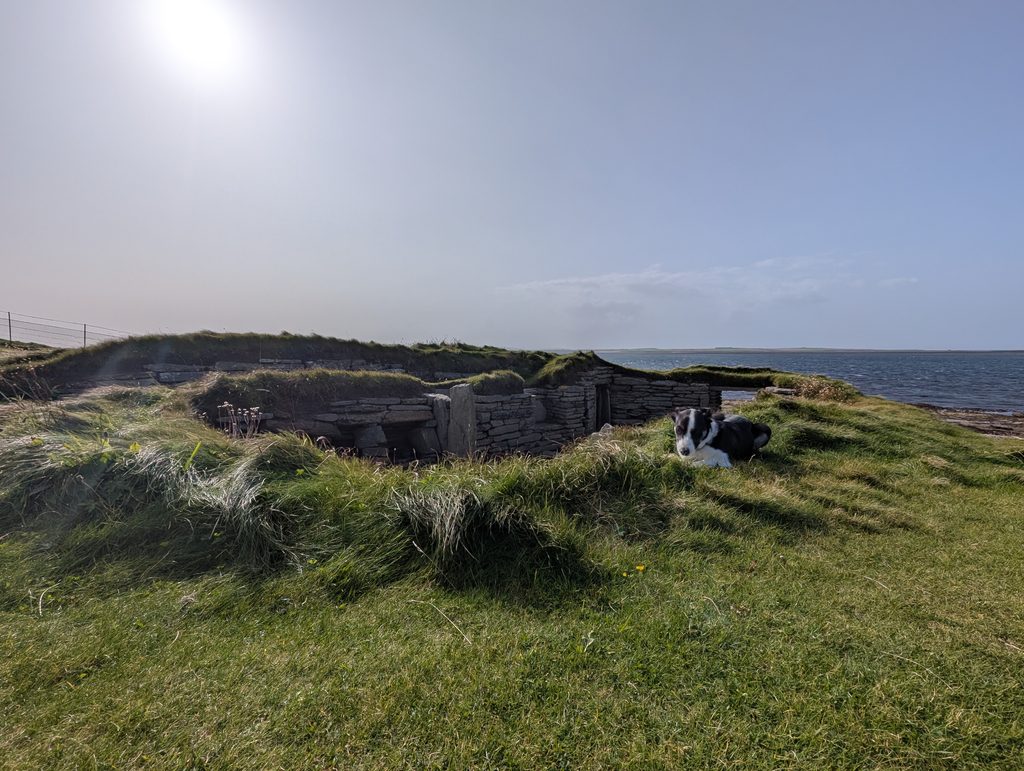
My island hopping continued and I set off for Westray and Papa Westray (AKA Papay), two of the northern isles in the Orkney archipelago. On the ferry ride over I had a wonderful chat with a fellow passenger – and she turned out to be the owner of a very cool textiles business that is seen featured in the Orkney Islander magazine.
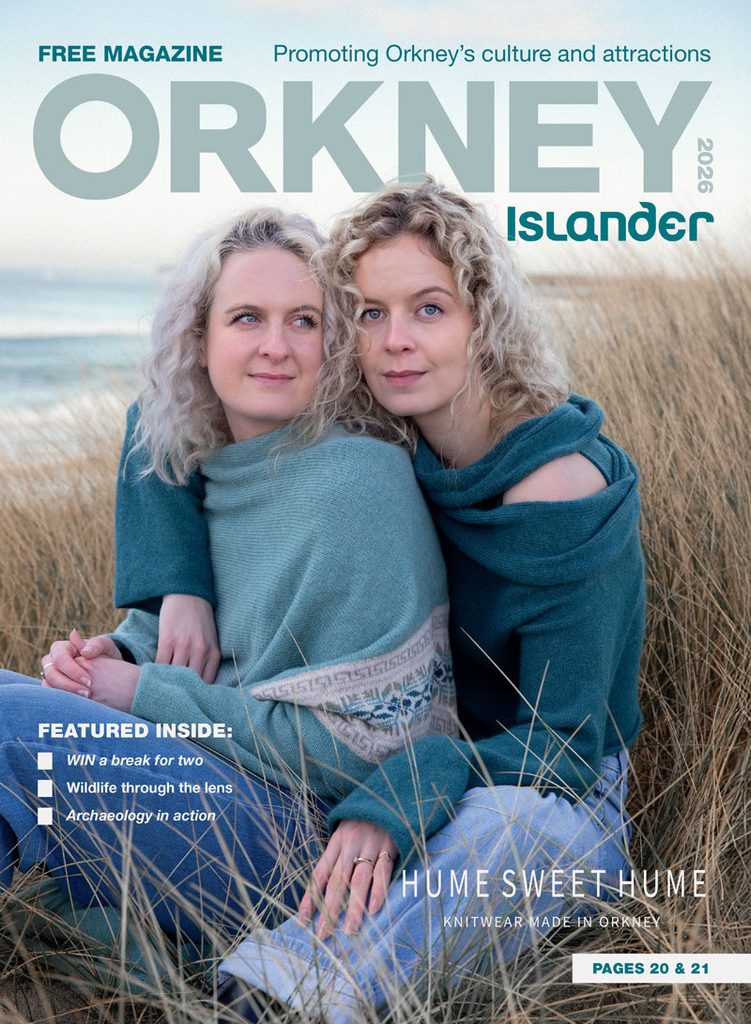
I learned a lot about Westray from her and she even face me a quick tour of the Pierowall area before dropping me off at my hostel. This island has lots of community activities, restaurants, and even two grocery stores! I went for a stroll and stopped in at the heritage centre and was able to see the Westray stone (a large stone from the neolithic period, carved with spirals – similar to carvings found in Ireland) and the Westray Wife (neolithic carved figurine – the earliest depiction of a human face discovered in the UK.) The Heritage Centre also had some amazing textiles from local artists on display in their gallery.
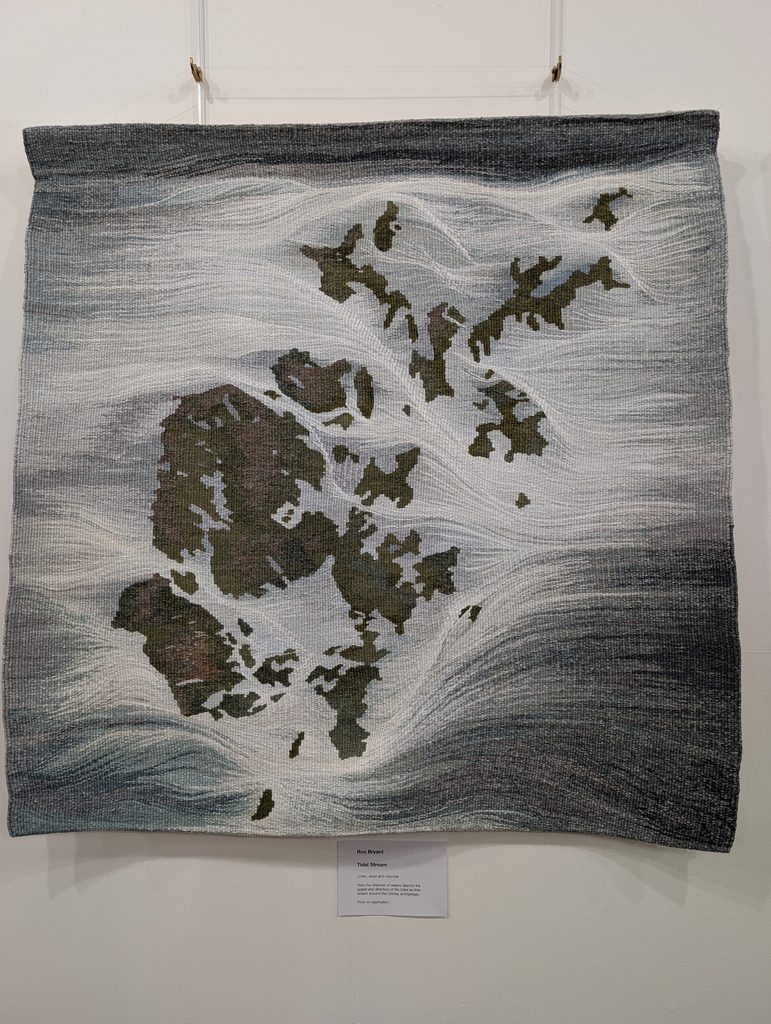
Tidal Stream, by Ros Bryant
The following day, I took a small passenger ferry to the neighbouring island of Papa Westray for a tour with the island ranger (associated with the Orkney Archaeology Festival). Johnathan (the ranger) picked us up at the ferry and then took us on a drive to see the island while we waited for the rest of the tour group to arrive at the airport. They were on the world’s shortest commercial flight over from Westray – only 2.7 km, and it takes about 1 minute. Then it was off to a small boat ride over to the Holm of Pay, a smaller island off the coast, now inhabited only by a small herd of sheep. On this island we visited a neolithic chambered cairn from about 3000 BC.
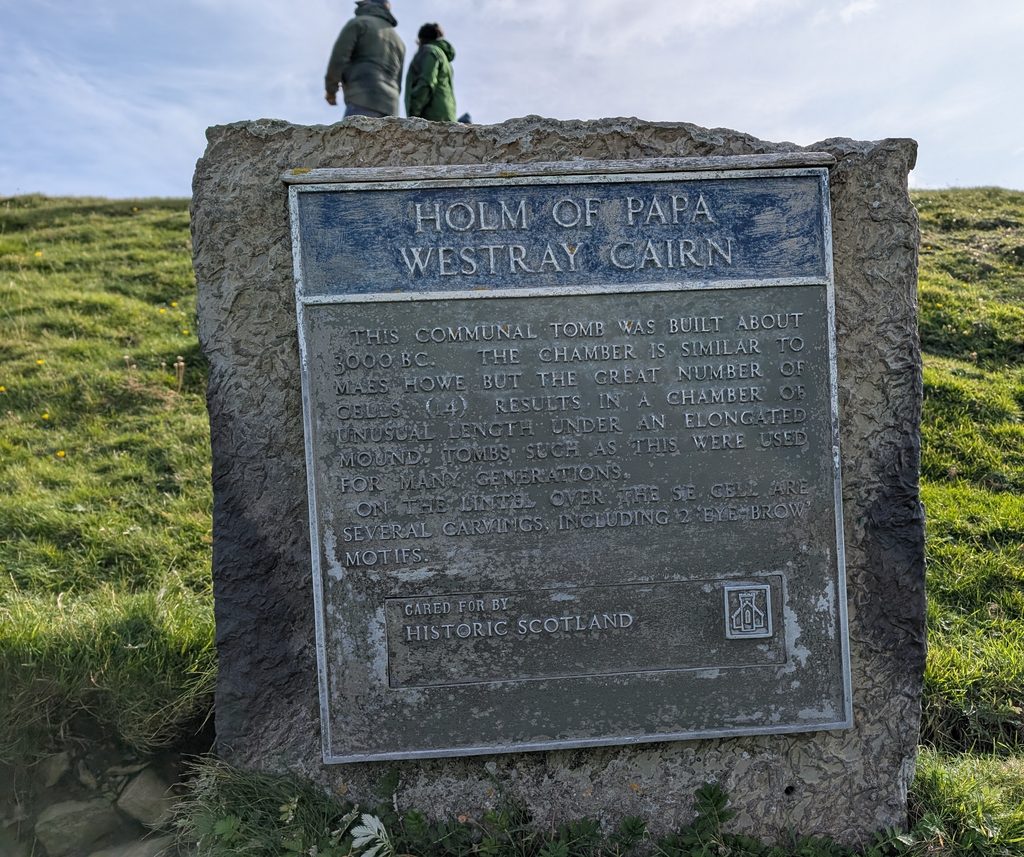
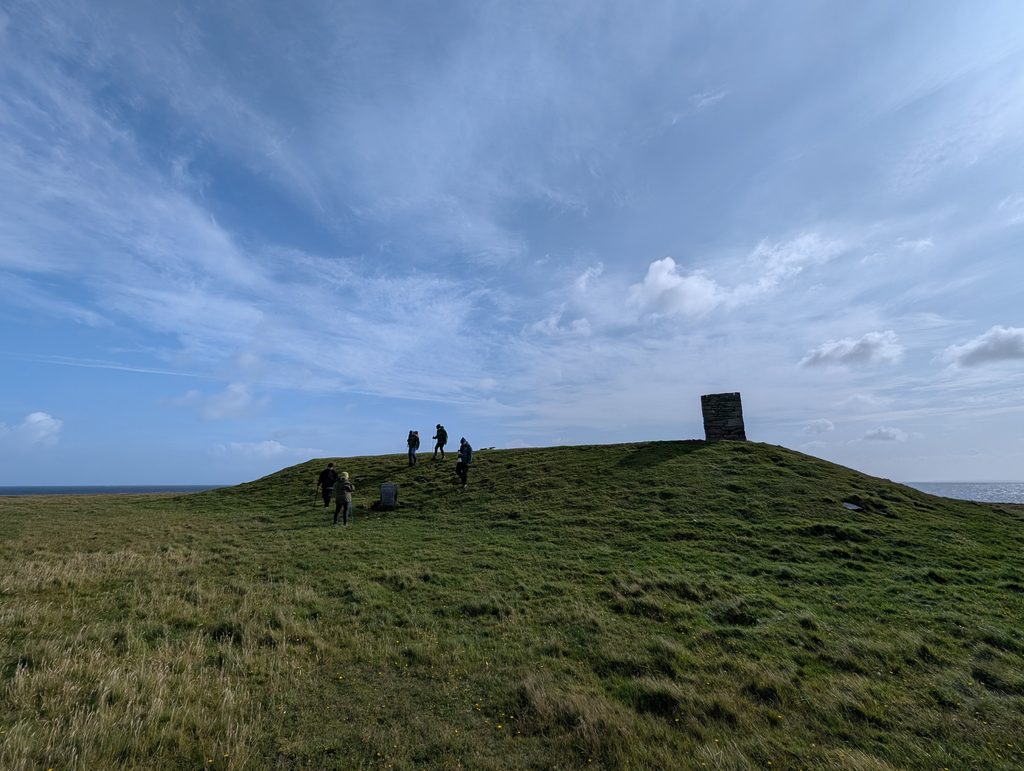
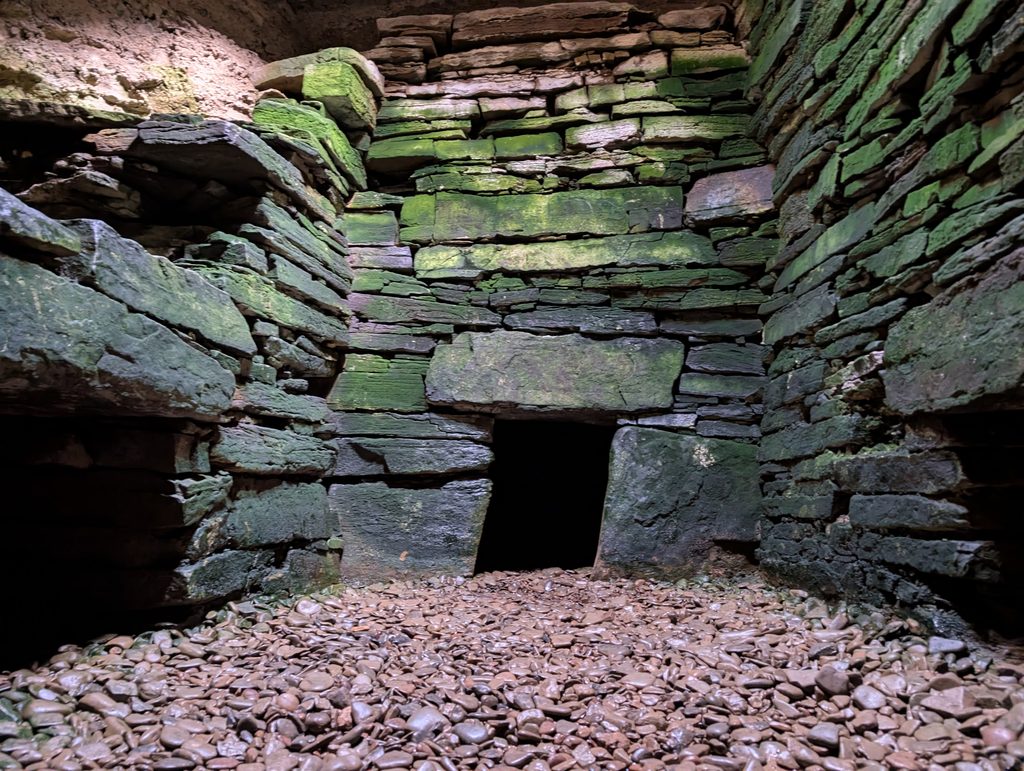
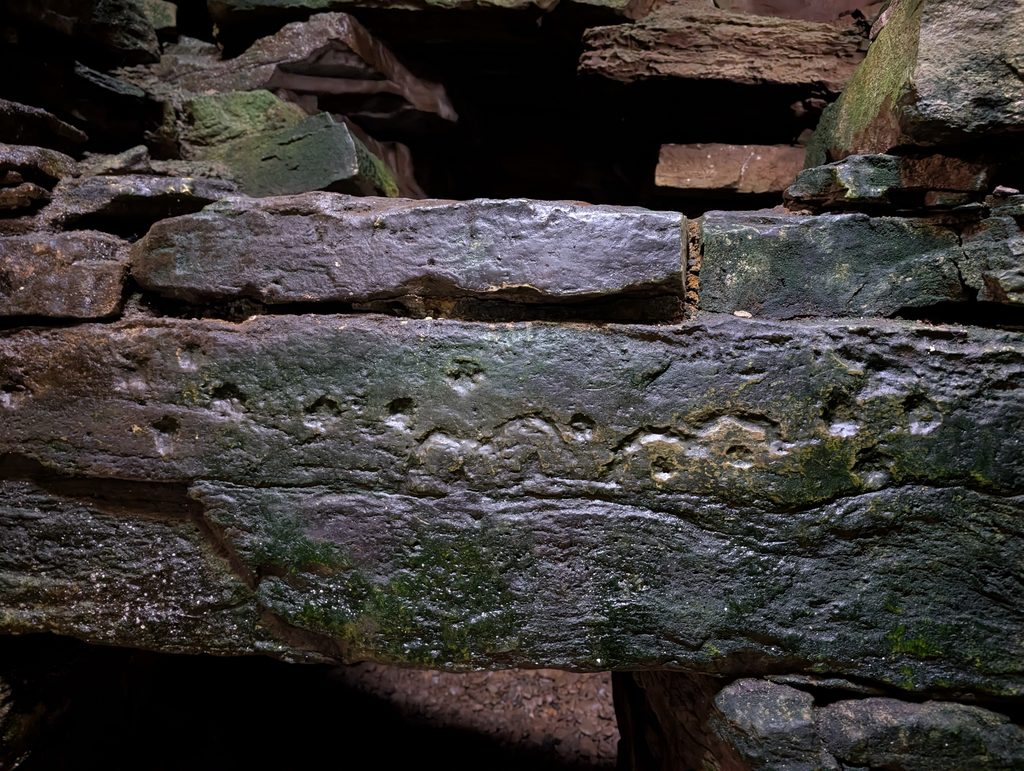
We were able to go inside and see the structure and the carvings inside (including the unique eyebrow markings.)
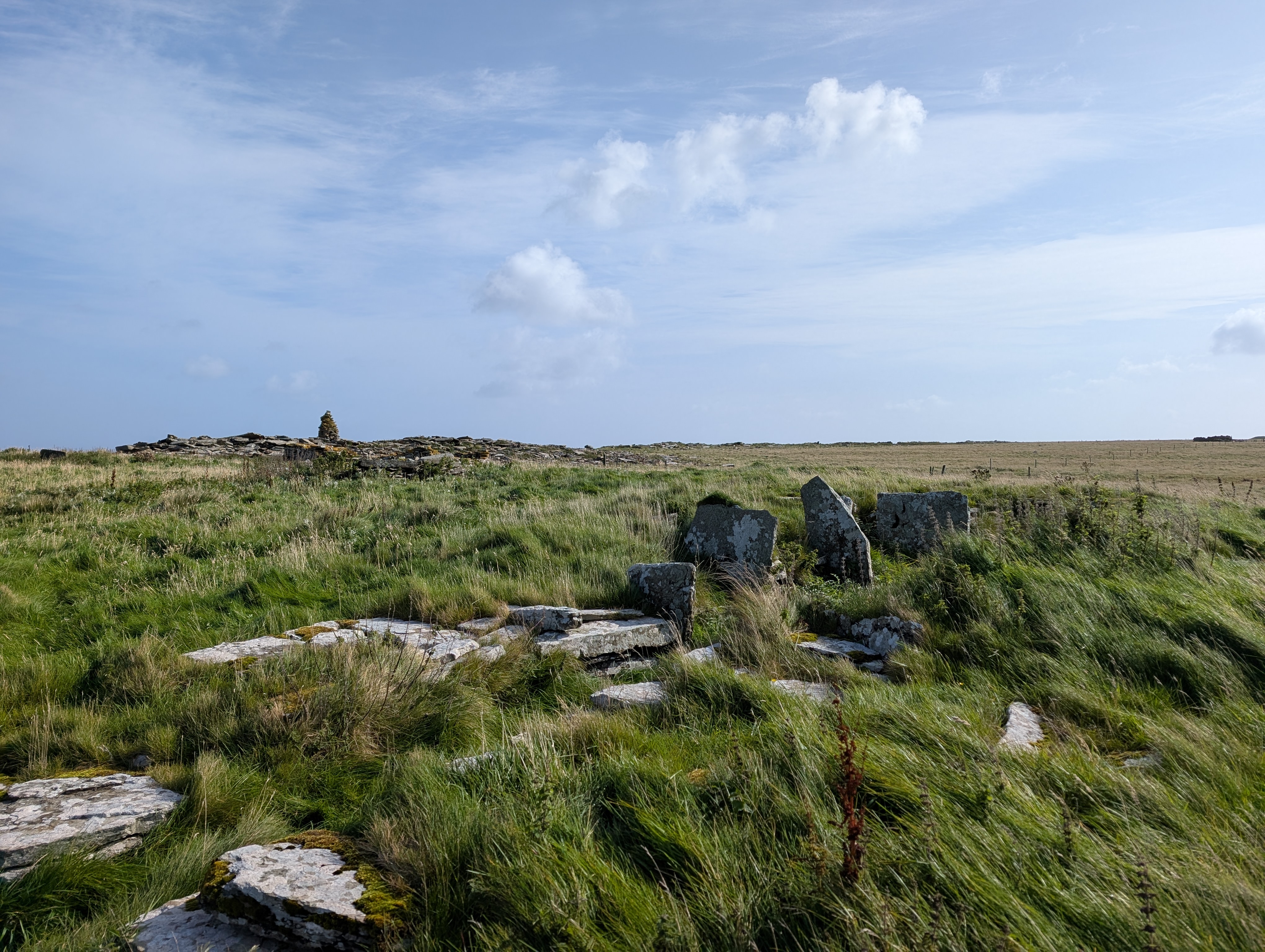
Then a walk about the rest of this tiny island to see a stalled cairn.
Back on the boat (past some seals) and lunch (where I had my very first Irn Bru!), and then off to the Knap of Howar.
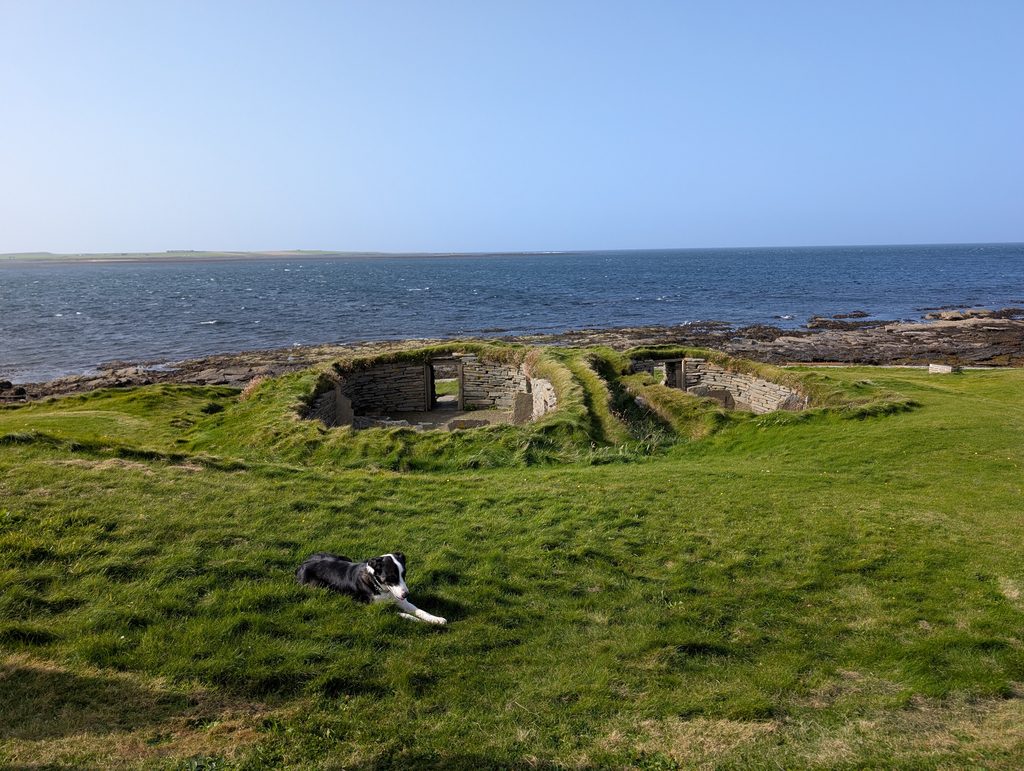
Bess, the dog from the nearby farm, was our associate tour guide to see this incredibly preserved neolithic settlement site. We were able to go inside and walk around inside these two buildings that predate the Skara Brae site.
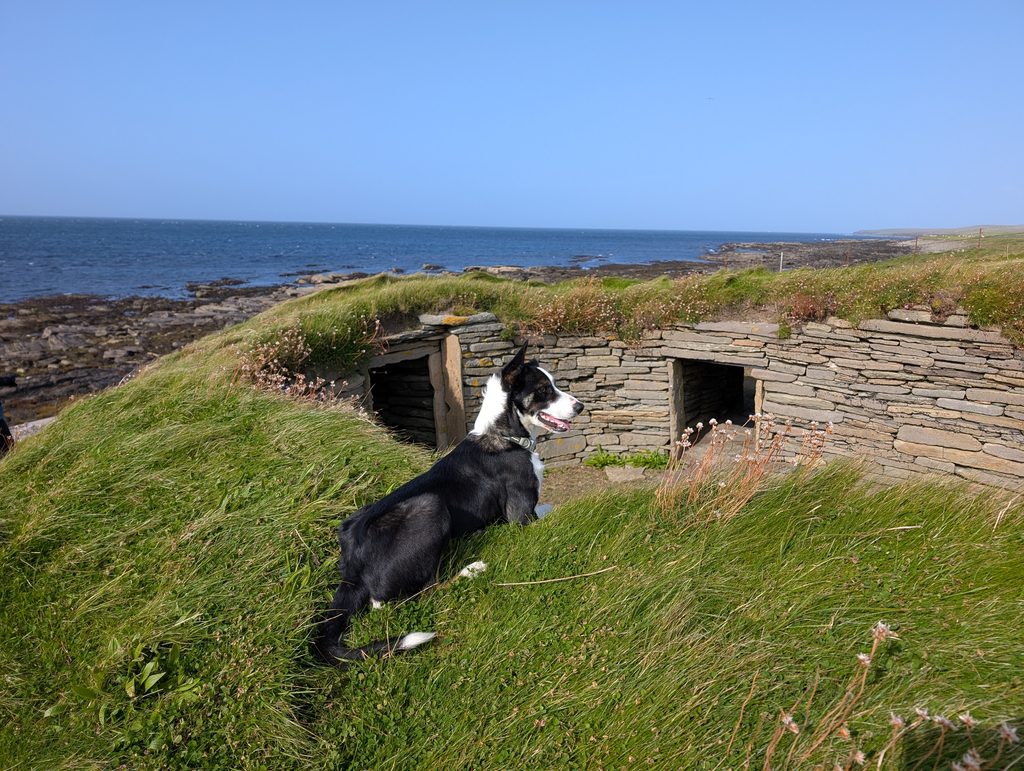
Bess has a great game she likes to play with the visitors:
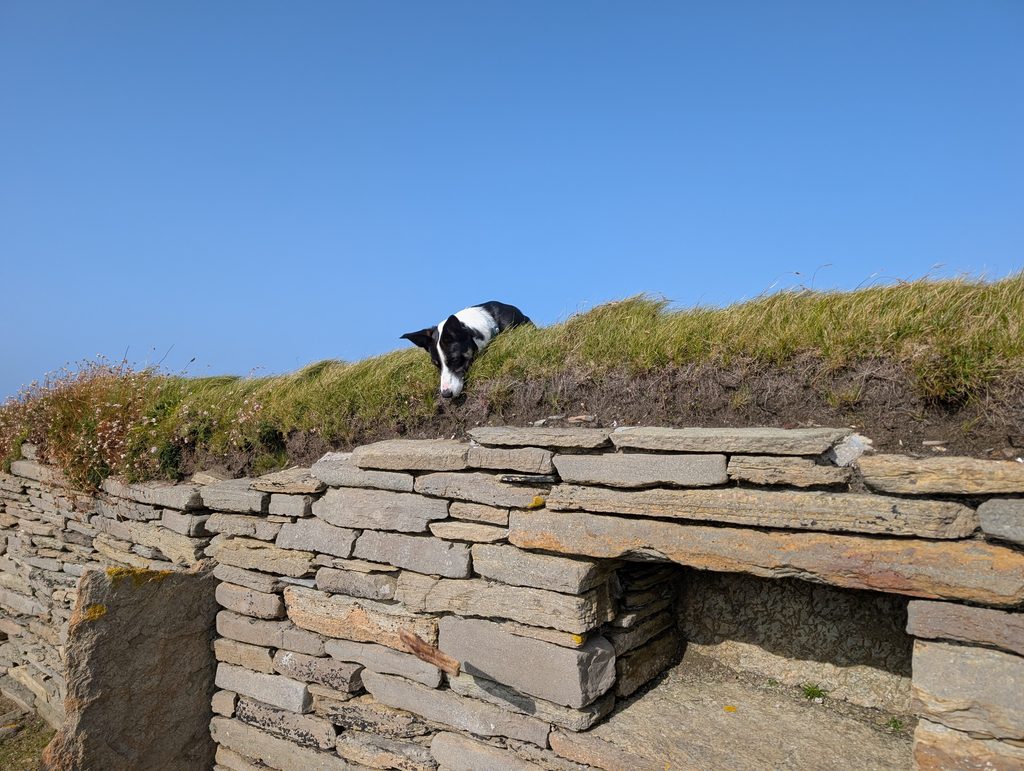
Look closely to see her precious stick falling down into the house, ready to be thrown again.
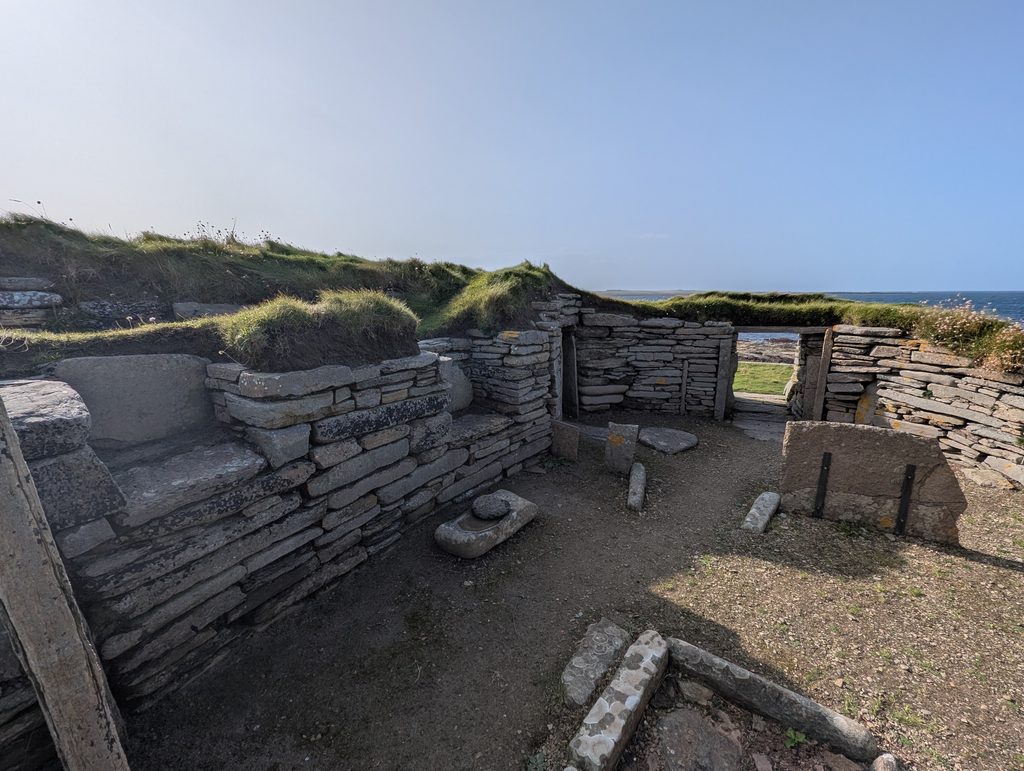
The quern for grinding grain was found in situ at this site.
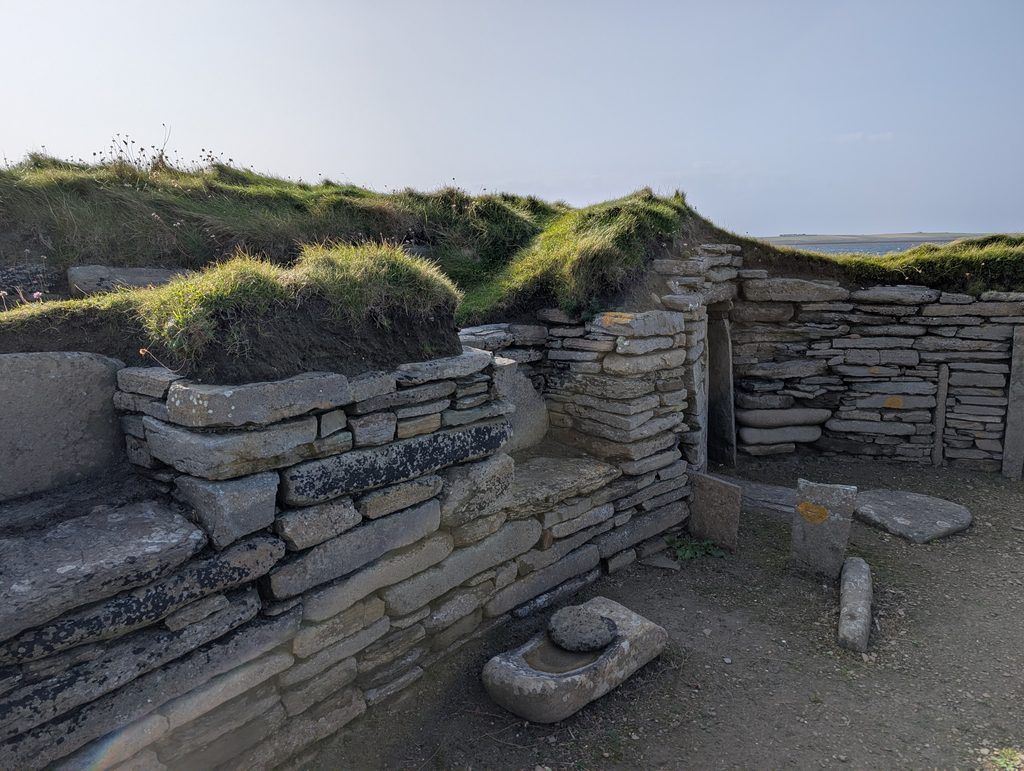
One thing that struck me was that these double layered stone walls, insulated with a layer of midden in between seems much more cozy than the stone bothy up the hill, which was used for farmhand quarters a hundred+ years ago – single layer stone walls with flagstone roof and no insulation of any kind.
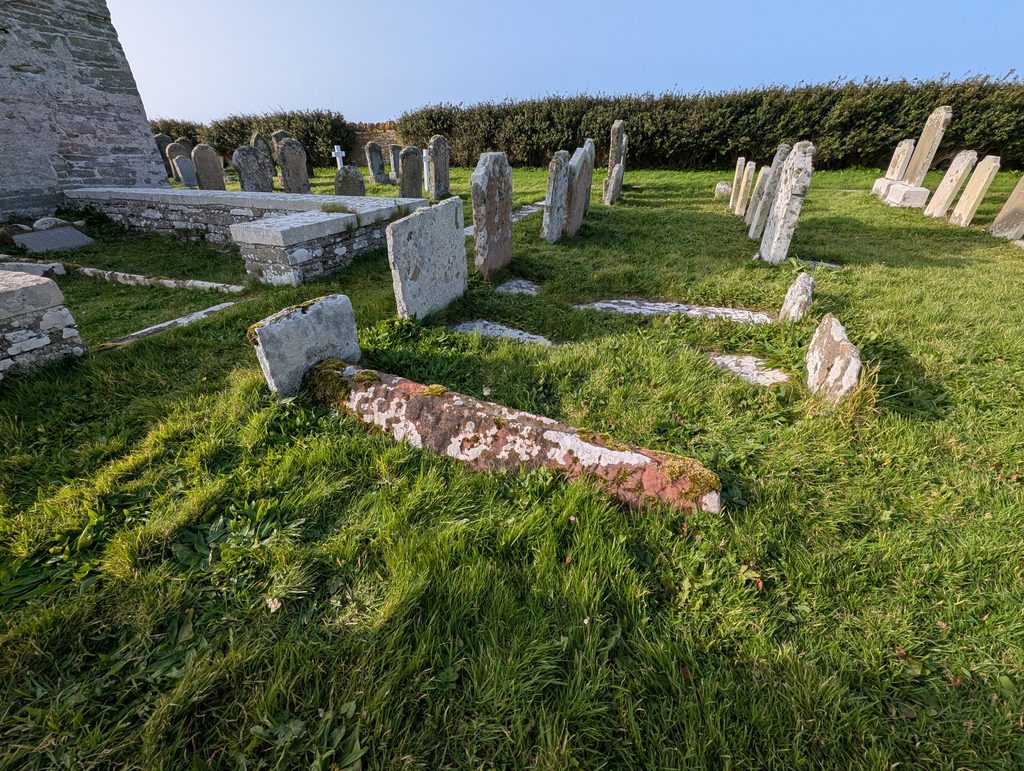
Next off to the 12th century St. Boniface Kirk, with an incredible Norse tombstone in the kirkyard. The site was previously used as early as the iron age, as evidenced by a significant midden site discovered nearly.
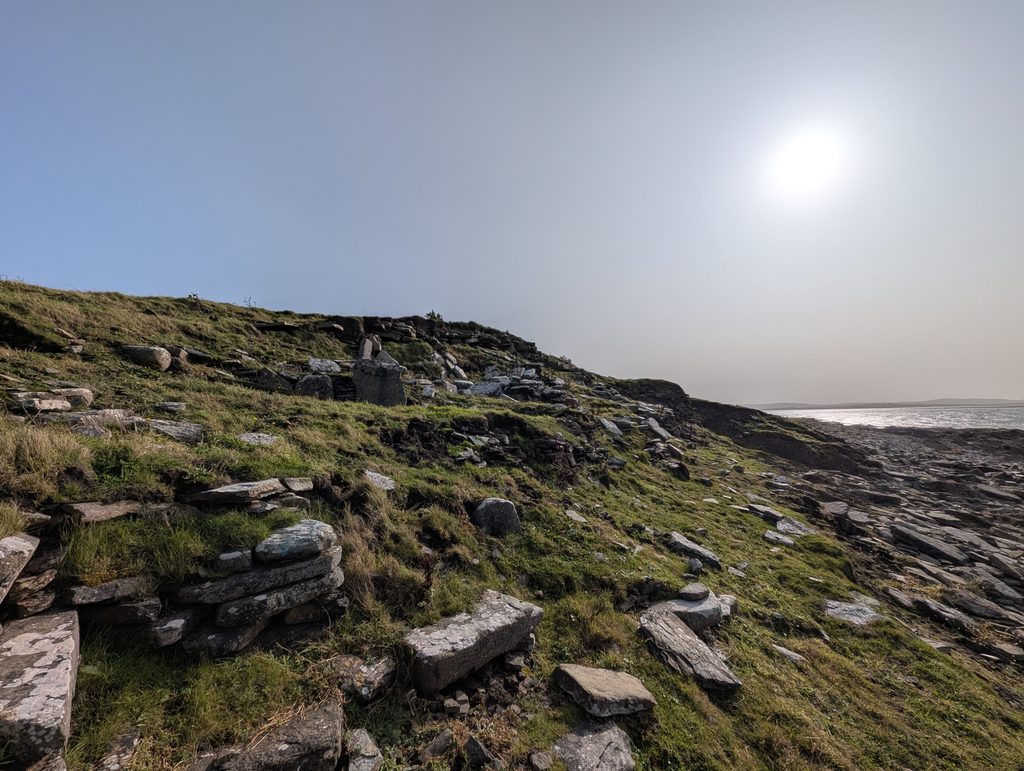
Back on the ferry to Westray, where I visited a castle, and then the next day I awoke to driving rain and high winds for my morning walking archaeology tour of the Pierowall area. Good thing I had rain gear!
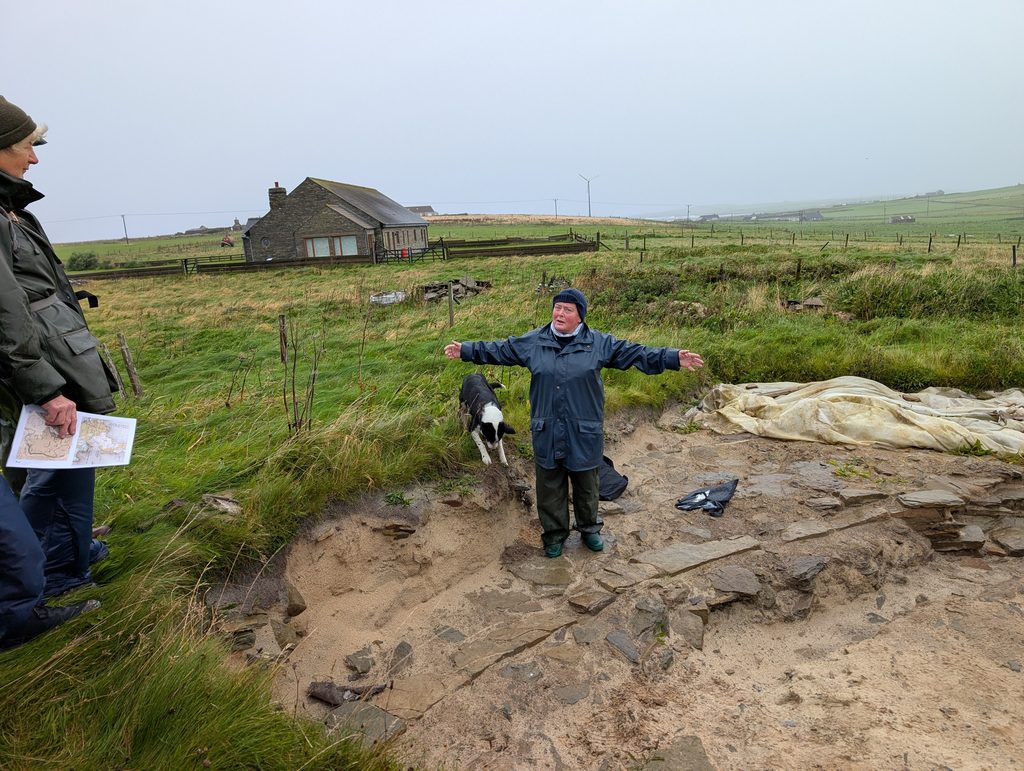
Do you spot another archaeology-loving friend? Yes, Bess the archaeology dog had come over from Papay for the tour as well.
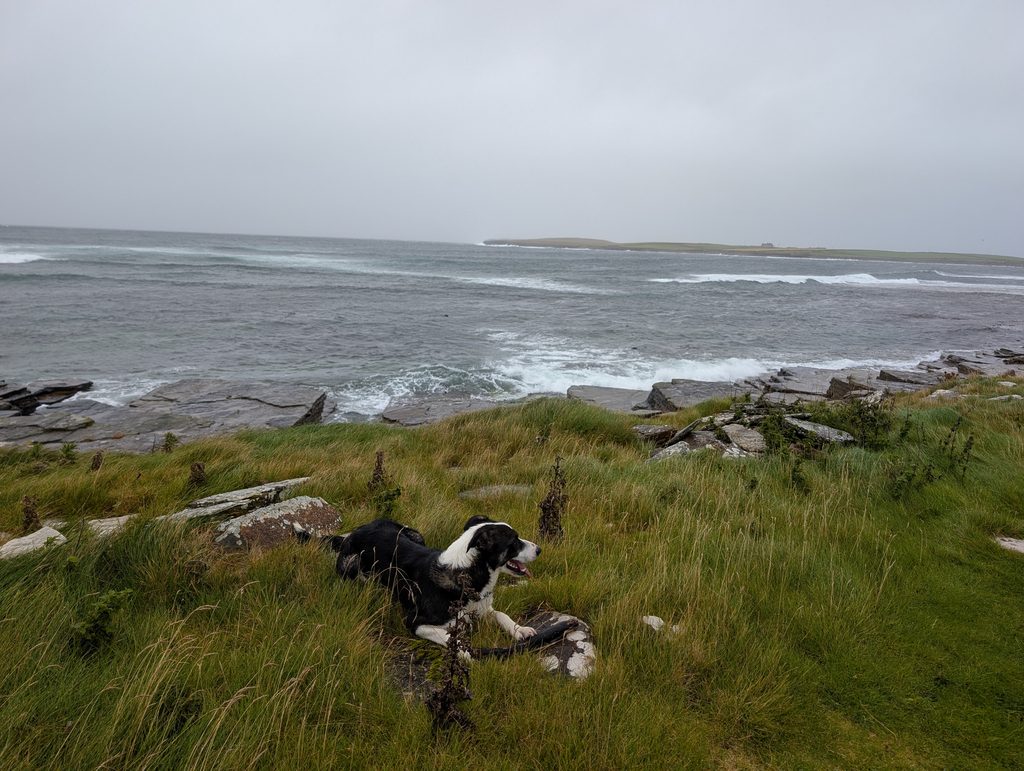
We visited several sites including the one where the spiral-carved Westray Stone was discovered, and then off to the Lady Kirk.
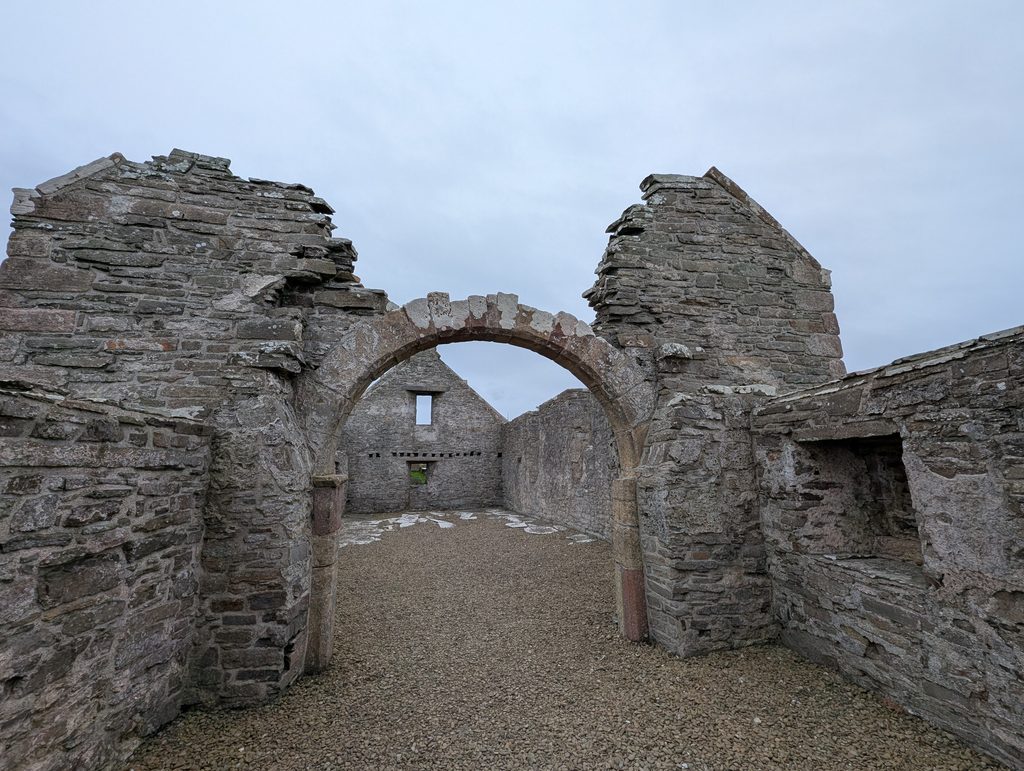
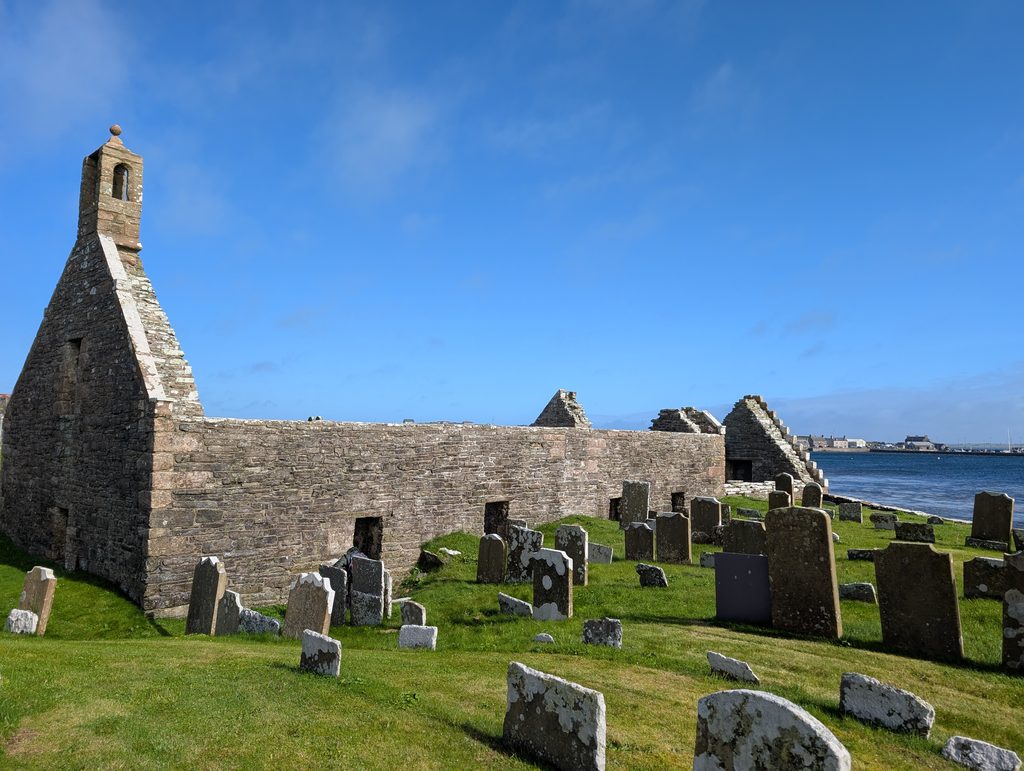
And the sun came back out.
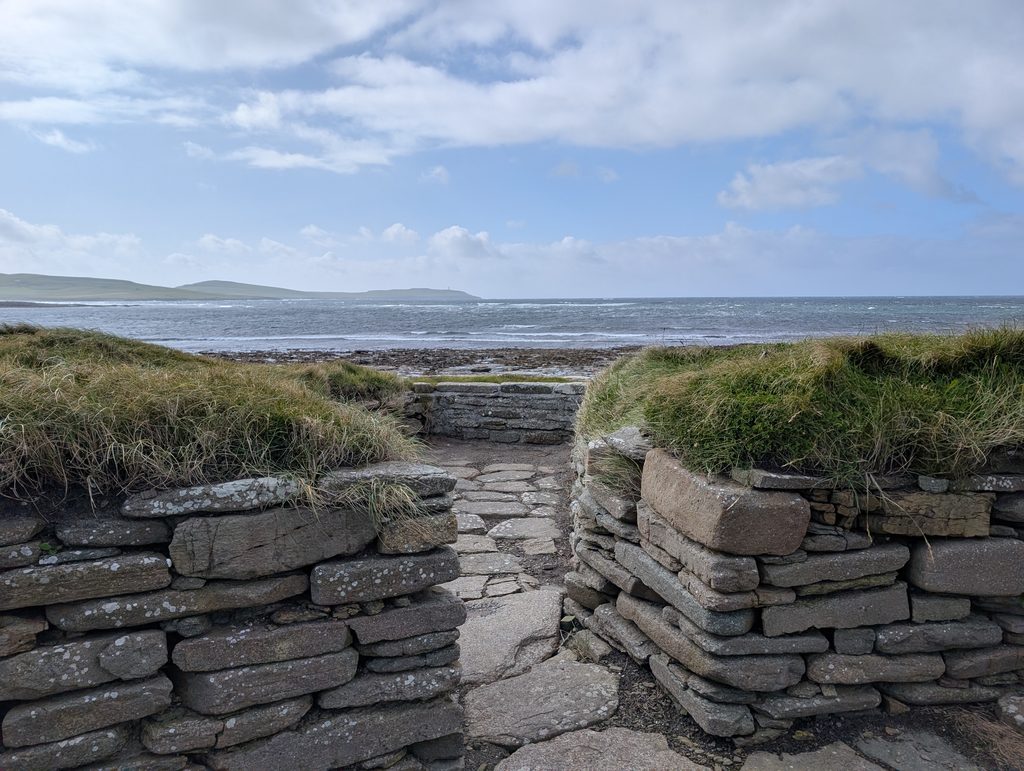
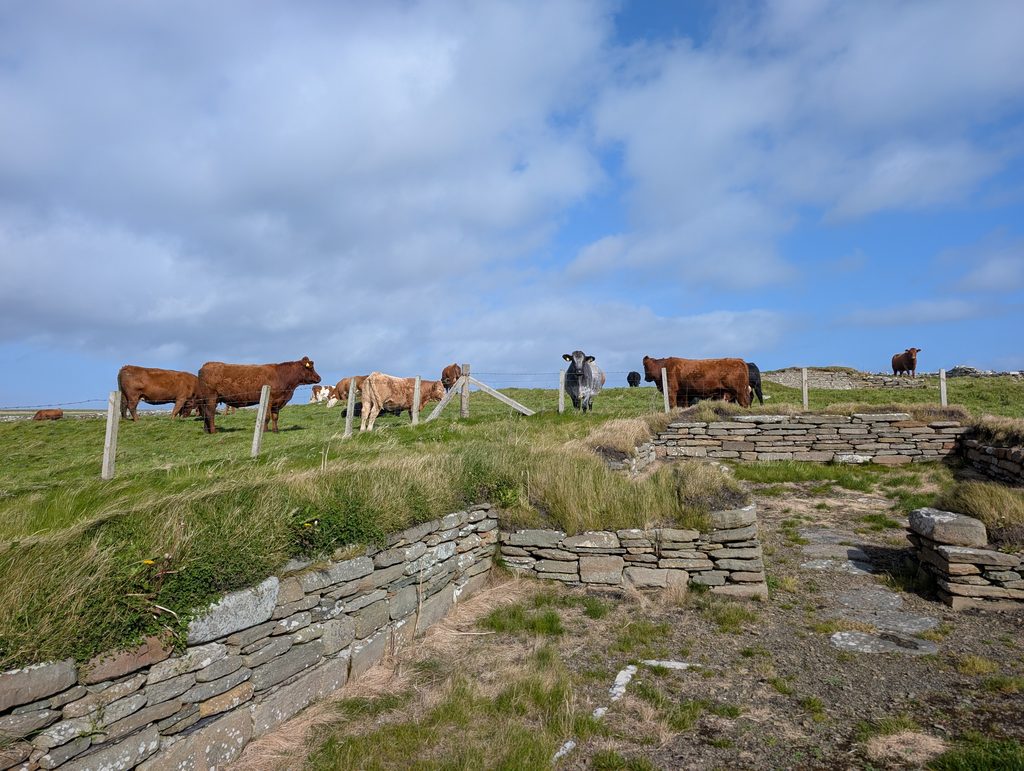
One more site in the afternoon – Quoygrew settlement, accompanied by a herd of cows…
One impression I had, especially from the other participants on the tours, was that these islands are chock-full of amateur and professional archaeologists and also many artists. These are rich and fascinating communities, and I would love to go back and visit again earlier in the summer to see the birds and wildflowers that were past season right now. Primula scotica, I’m coming back to meet you,!